Tool Integration
Connect CRM, email, files, databases, APIs and internal systems into one operating layer.
Services
Custom software, automation and AI for companies that need to unify their information and operate better.
See all services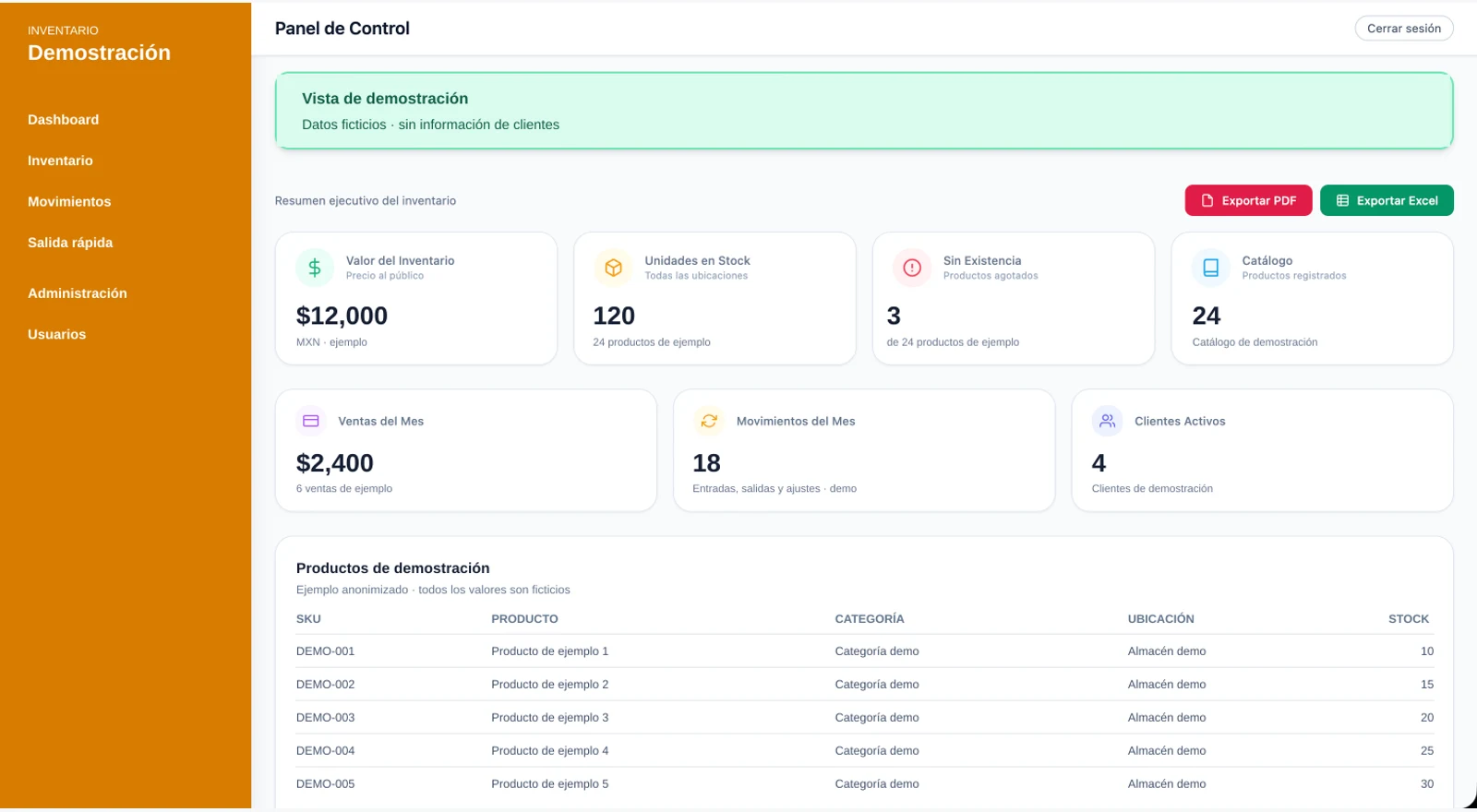 Case studyInventory ManagementWarehouse and sales operations without spreadsheets.View case
Workflow systems that connect platforms, eliminate repetitive work and create measurable operational efficiency across your entire organization.
Request informationWho it's for
We build the layer that connects your systems, keeps data aligned and removes duplicate data entry.
The same information is entered in the CRM, a spreadsheet and the ERP, with errors at every step.
There are custom connections nobody maintains, and they fail without anyone noticing.
Every team has its own version of the truth and meetings start by agreeing which one is right.

Your systems connected, your data aligned, nothing entered twice.
Automation infrastructure
Capabilities
Capabilities that combine around the process. We start with the one that solves the clearest problem.
Connect CRM, email, files, databases, APIs and internal systems into one operating layer.
Automated data pipelines that keep your tools aligned and information consistent.
Event-driven automations that respond to changes, requests and business events.
Track automation performance, detect bottlenecks and measure operational efficiency.
Automated approval chains, notifications and escalation paths.
APIs, webhooks and middleware built to bridge disconnected systems.
What you get
Every project ends with something your team uses every day and that can keep evolving.
Connections between your systems with retries, validation and error handling, not loose scripts.
You know when an automation fails and why, before a customer or user notices.
What connects to what, how information flows and how to add new integrations.
A layer ready to add AI agents, new systems or more volume without starting over.
Methodology
A short, verifiable process: every stage ends with something you can review.
Step 01
We map your current tools, data flows and manual processes.
Step 02
We design the integration layer and automation workflows.
Step 03
We build, connect and test the automation infrastructure.
Step 04
Continuous monitoring, scaling and improvement.
Stack
We use proven tools and pick each piece based on your systems, your data and your security requirements.
FAQ
Tell us what processes you want to automate and we'll design the infrastructure.